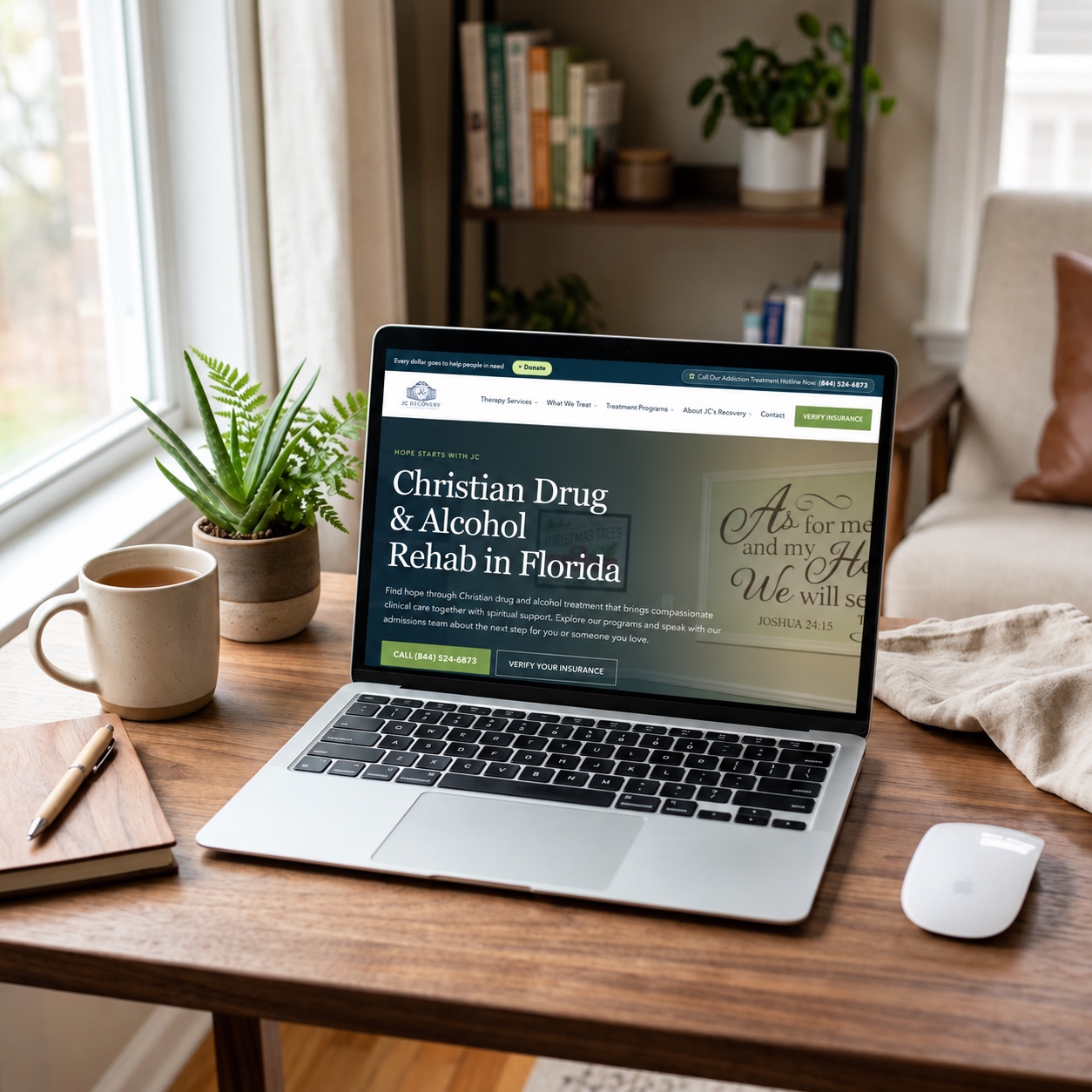
Program and Location
State the level of care and where it is provided. Help visitors understand which facility and program the page describes without relying on a general headline or stock image.

Brand House provides addiction treatment website design and development for drug and alcohol rehab centers. We organize program information, build clear mobile contact paths and plan the technical work behind a new site or redesign, including SEO migration, forms and agreed integrations.
Discuss Your Rehab Website.webp)

.svg)

Page layouts and navigation that reflect the facility's programs and brand. Design decisions make important information easier to find and give visitors a clear next step on each page.
Development and device testing for the agreed page types and functionality. We review navigation, contact options and readable layouts across screen sizes as part of the build.
A structure for program, location, admissions and supporting pages. Identify content to retain, rewrite or create, with the provider responsible for approving clinical facts and operational details.
Review current URLs and important pages before changing the structure. Plan redirects where needed, carry over relevant metadata and check crawl access and links after launch.
Focused pages for specific program and advertising needs. Align the message, supporting information and contact path with the campaign rather than relying on one page for every search.
Scope call tracking, analytics and form connections around the systems you use. Identify data handling and access requirements before implementation, then test the agreed inquiry paths.
A review can identify whether selected pages or a broader rebuild need attention. The decision follows the condition of the current site, its search visibility and the functionality required.
Define launch checks, editing access and any ongoing support in the agreement. Hosting, maintenance and future content updates should have a clear scope rather than being assumed part of every build.
Rehab center website design needs to explain what the facility offers before asking someone to contact admissions. Clear program pages, location information, staff credentials and an understandable inquiry process help visitors evaluate whether the center may meet their needs.
We plan those decisions alongside the build. Existing URLs, content responsibilities, forms, tracking and integrations belong in the project scope from the start. For a redesign, the review also identifies useful pages and search visibility that need to be protected during the transition.
Visitors should be able to identify the care offered, location and admissions process. A clear page structure reduces the need to piece together answers from unrelated sections.
Crowded menus, difficult forms and unclear phone links can interrupt an inquiry. We review the actual mobile journey alongside the desktop design, including error and confirmation states.
Staff details, facility information and accurate credentials should be easy to locate. Use real, approved material so the website reflects the provider rather than generic treatment imagery alone.
Changing URLs or removing useful pages can create avoidable problems. A migration plan accounts for existing content, redirects, links and post-launch checks before the new site goes live.
Confirm programs, audiences, existing pages and project goals. Identify integrations, access needs and content responsibilities so the estimate reflects the work the site actually requires.
Build the sitemap and decide what each page needs to explain. Review the main navigation and admissions path, then agree on the content and factual approvals needed.
Develop the approved layouts and functionality. Check mobile behavior as the site takes shape, and connect forms, tracking and integrations according to the agreed project scope.
Check important URLs, redirects, forms, phone links and device layouts. Review editing access and support arrangements with your team, then monitor for launch issues.
The page structure below illustrates the questions a program page should answer. Its details should come from the treatment provider. It is a planning example, not a client website or a claim about clinical suitability.
State the level of care and where it is provided. Help visitors understand which facility and program the page describes without relying on a general headline or stock image.
Explain the schedule, care offered and practical admissions questions using provider-approved information. Make relevant staff and facility details easy to find from the page.
Offer readable call and inquiry options in context. Explain what happens after someone reaches out, with form fields and data handling reviewed for the intended use.
Link to admissions, location and related program information where it helps the visitor. Keep the next step useful and avoid sending people through several generic service pages.
AI-assisted tools may support development checks and troubleshooting. Design, accessibility review, integration decisions and launch testing still require direct review of the actual website.
The scope reflects your licensed services, actual locations and the programs your team is prepared to support. We confirm these details before planning pages or campaigns.
The cost of a rehab website depends on the number of pages, design requirements, content needs, integrations, tracking setup, and whether the project is a new build or a redesign. We review the scope during an initial consultation and provide a project-specific quote.
Yes. We redesign existing rehab websites that have outdated visuals, unclear navigation, weak mobile performance, poor page structure, or limited support for SEO and paid advertising. We can rebuild the full site or improve selected sections depending on the condition of the current website.
Most treatment center websites need pages covering the facility, admissions process, levels of care, substances treated, clinical services, insurance information, locations, staff, accreditations, contact options, and frequently asked questions. The final website structure should reflect the services the facility actually provides.
Yes. We build rehab websites with technical SEO, page hierarchy, internal linking, mobile performance, metadata support, and content expansion in mind. Ranking growth still requires ongoing content, authority building, technical monitoring, and optimization after launch.
Yes. The website can support Google Ads through focused landing pages, fast loading times, clear program information, conversion tracking, call tracking, and forms built around specific campaign goals.
Yes. We can help organize, rewrite, and develop website content around your programs, levels of care, treatment approach, locations, admissions process, and SEO priorities. Clinical and factual information should be reviewed and approved by the treatment center before publication.
Yes. Every website is designed and tested for mobile users. We focus on readable content, simple navigation, accessible calls to action, fast performance, and forms that are easy to complete from a phone.
We can configure analytics, form tracking, call tracking, and supported CRM or admissions integrations. The exact setup depends on the platforms your organization uses and the information that needs to pass between systems.
We take steps to protect existing SEO value during a redesign, including reviewing current URLs, preserving important pages, mapping redirects, carrying over metadata, and checking indexing after launch. No migration is risk-free, but careful planning can reduce unnecessary ranking and traffic losses.
Before signing a project agreement, confirm domain and hosting access, ownership of the finished work, any software licenses, editing access and what happens at handoff. Hosting support, maintenance and future updates may be separate services. These terms should be stated in the agreement rather than assumed from the website build.
Most projects take approximately six to ten weeks, but the timeline depends on the number of pages, content readiness, revision process, integrations, and overall scope. Larger treatment center websites or projects requiring extensive content development may take longer.
Bring your current website or new-project brief. We can review the pages, inquiry paths and technical requirements, then discuss whether targeted improvements or a broader rebuild fit your needs.
Discuss Your Rehab Website


Brand House AI