
One of the most common questions businesses ask before investing in digital marketing is simple:
How much should a lead actually cost?
The answer varies significantly depending on the industry, competition level, geographic market, and how efficiently a business converts traffic into actual customers.
A plumbing company, personal injury law firm, dental office, and addiction treatment center are all competing in completely different environments. Some industries can generate leads for under $50, while others may spend thousands of dollars to acquire a single qualified opportunity.
Understanding average cost per lead benchmarks helps businesses set realistic expectations before launching campaigns and better evaluate whether their current marketing efforts are performing efficiently.
The ranges below are directional estimates based on industry CPC data, competitive market analysis, and typical landing page conversion assumptions. Actual results vary based on targeting, geography, conversion rates, offer quality, and sales process efficiency.
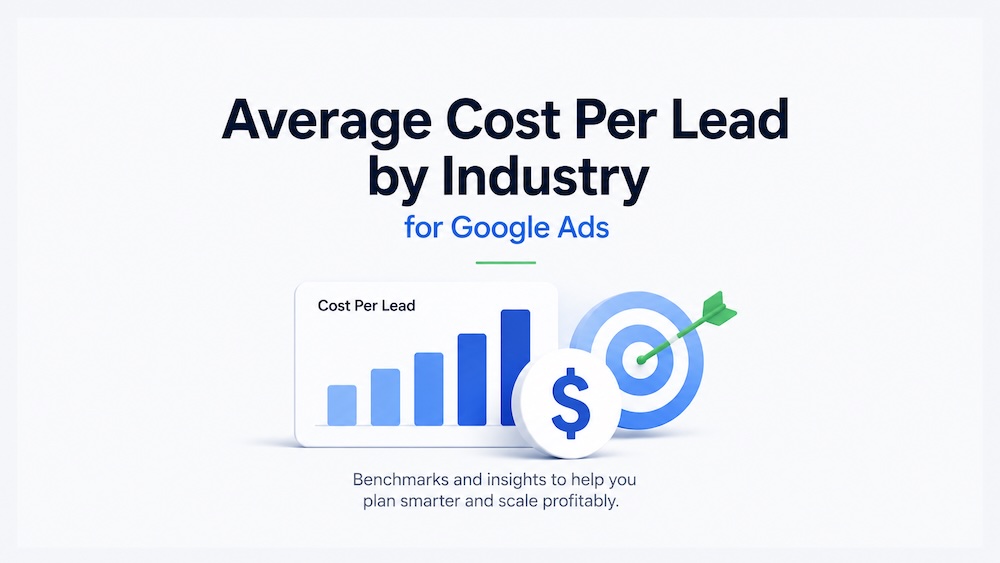
Average Cost Per Lead by Industry (2026 Benchmarks)
| Industry | Estimated CPC | Estimated Conversion Rate | Estimated Cost Per Lead |
|---|---|---|---|
| HVAC | $12 – $85 | 5% – 10% | $150 – $850 |
| Roofing | $10 – $60 | 4% – 8% | $125 – $750 |
| Plumbing | $10 – $80 | 5% – 10% | $100 – $800 |
| Dental | $2 – $20 | 8% – 15% | $15 – $250 |
| Personal Injury Law | $60 – $500 | 2% – 5% | $1,200 – $10,000+ |
| Rehab / Addiction Treatment | $15 – $90 | 3% – 8% | $200 – $3,000+ |
| Med Spa | $2 – $10 | 8% – 15% | $15 – $125 |
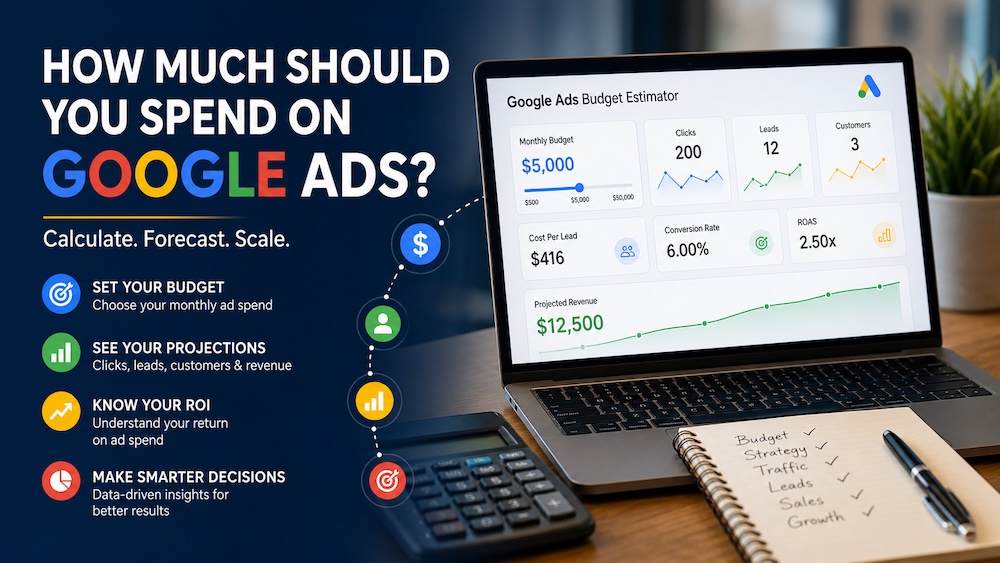
Businesses looking to estimate how CPC and conversion rates impact lead costs can use our Google Ads Budget Estimator to model projected clicks, leads, and customer acquisition scenarios.
Our team of experts is here to help you navigate the complex landscape and drive real results.
TALK TO AN EXPERT →Why Cost Per Lead Varies So Much Between Industries
Lead costs are heavily influenced by competition and customer value.
Industries where one customer can generate thousands or tens of thousands of dollars in revenue are naturally more competitive. Businesses in those markets are willing to spend more aggressively to acquire leads, which increases cost per click and ultimately increases cost per lead.
For example, a personal injury law firm may be willing to spend several thousand dollars to acquire a qualified case because a single signed client can produce substantial revenue. A local med spa or dental office may operate with lower margins and lower acquisition costs.
Geographic competition matters as well. Businesses advertising in highly competitive markets often experience significantly higher acquisition costs than businesses targeting smaller or less saturated areas. This is one reason why PPC costs in Los Angeles can vary so dramatically between industries and campaigns.
Why Cheap Leads Are Not Always Better
One of the biggest mistakes businesses make is focusing only on generating the cheapest possible leads.
A low cost per lead does not automatically mean a campaign is profitable.
A lot of cheap leads are low intent, poorly qualified, or shared with multiple competitors. They may look good in a report while producing weak close rates and poor ROI.
In many cases, a higher-quality lead with a higher acquisition cost produces significantly better long-term profitability.
A $500 lead that consistently turns into a $10,000 customer is far more valuable than a $50 lead that never closes.
This is why businesses should evaluate lead quality and customer acquisition cost instead of obsessing over CPL alone.
What Actually Impacts Cost Per Lead
Many businesses assume lead cost is determined only by ad spend. In reality, several operational and marketing factors influence performance.
Some of the biggest factors include:
- Landing page quality
- Website conversion rate
- Keyword targeting
- Geographic competition
- Offer quality
- Campaign structure
- Call handling quality
- Sales process efficiency
- Speed to lead
- Lead qualification process
A poorly optimized landing page can double or triple cost per lead even when traffic quality remains the same.
Likewise, businesses that respond slowly to leads often waste opportunities they already paid to generate.
We have seen situations where businesses aggressively lowered CPL only to realize lead quality collapsed and close rates dropped with it. The campaign looked more efficient on paper while actual revenue declined.
This is also why some businesses are exploring whether AI voice systems can improve marketing performance, especially when missed calls, slow intake, and inconsistent lead handling are becoming operational bottlenecks.
Why Businesses Should Track More Than CPL
Cost per lead is useful, but it should never be the only metric a business tracks.
A campaign can appear successful while still producing poor business outcomes if:
- Leads are unqualified
- Calls are missed
- Appointments are not booked
- Close rates are weak
- Customer acquisition costs are too high
A lot of businesses obsess over lowering CPL because it is one of the easiest numbers to look at inside a marketing report. The problem is that CPL by itself does not tell you whether the campaign is actually making money.
Businesses should also monitor:
- Qualified lead rate
- Booked appointment rate
- Close rate
- Customer acquisition cost (CAC)
- Return on ad spend (ROAS)
- Revenue generated per lead
This provides a much clearer picture of overall marketing performance.
What a “Good” Cost Per Lead Actually Looks Like
There is no universal number that defines a good cost per lead.
A lead is only valuable relative to:
- Customer value
- Profit margins
- Close rate
- Lifetime customer value
For example, a $1,500 lead may be extremely profitable for a law firm but completely unsustainable for a lower-ticket business.
Instead of comparing your lead costs to random numbers online, it is more important to understand:
- How much revenue each customer generates
- How many leads convert into customers
- How efficiently your sales process operates
- Whether your marketing is attracting the right type of customer
How to Reduce Cost Per Lead Without Increasing Budget
Many businesses immediately assume they need to spend more money to improve results. In reality, lowering cost per lead often comes from improving efficiency rather than increasing ad spend.
Some of the most effective ways to reduce CPL include:
- Improving landing page conversion rates
- Using stronger offers and calls to action
- Improving call handling and intake
- Adding negative keywords
- Tightening geographic targeting
- Improving follow-up speed
- Separating campaigns by service intent
- Tracking conversions more accurately
In many cases, businesses already have enough traffic. The real issue is how efficiently that traffic is being converted into qualified opportunities and customers.
If businesses want to improve long-term ROI, focusing on the entire lead handling process is often just as important as improving the marketing itself. This is one reason many businesses invest in PPC management services that focus not only on traffic generation, but also on conversion quality and revenue performance.
Final Thoughts
Average cost per lead varies dramatically between industries, and there is no single benchmark that applies to every business.
The businesses that perform best are usually not the ones generating the cheapest leads. They are the ones that understand how to convert leads into revenue efficiently.
Before increasing your marketing budget, it is important to understand where leads are being lost, how your conversion process performs, and whether your current campaigns are attracting the right type of customer.
Lead generation is not only about traffic. It is about building a system that turns interest into actual revenue.
Brand House builds campaigns around search intent, budget control, landing pages, conversion tracking, and lead quality — so you generate qualified leads instead of just buying traffic.
TALK TO AN EXPERT →