
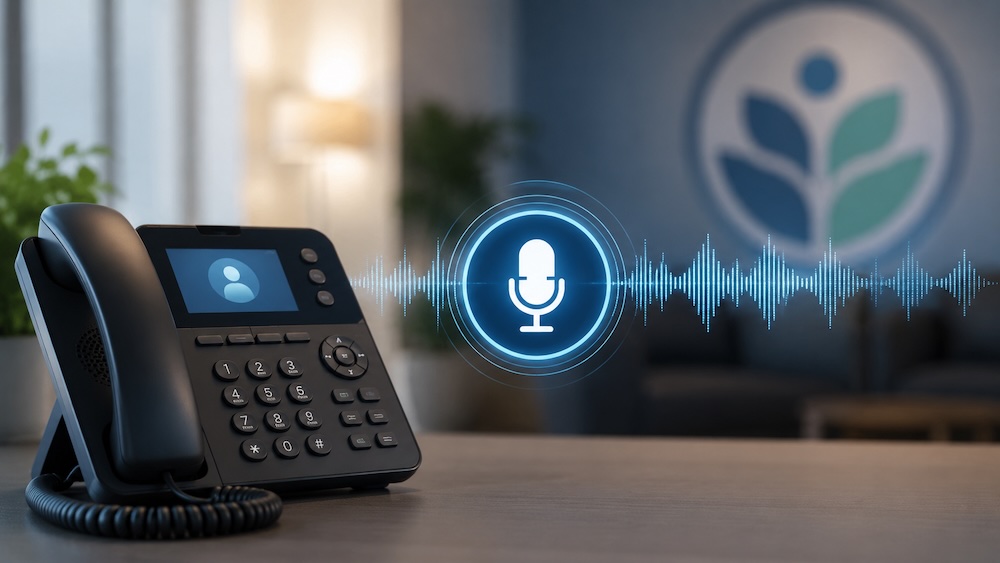
Yes, addiction treatment centers can use AI voice agents, especially for calls that come in after hours or when staff cannot answer.
I have used these systems, and they can help when a center does not have enough staff to answer every call. The AI can collect a name, phone number, and reason for calling so the admissions team can follow up during regular hours.
But AI voice is not ready to replace an admissions rep or run the entire admissions process. It still needs detailed training, regular testing, and clear limits around what it is allowed to say.
Where AI Voice Can Help Treatment Centers
Treatment calls do not only come in during business hours. Someone may decide they are ready for help late at night, or a family member may start making calls after everyone else has gone to bed.
Larger treatment organizations may have enough staff to answer calls around the clock. Many centers do not.
For those facilities, answering calls after hours is one of the best uses of AI voice right now. Instead of sending the caller straight to voicemail, the system can answer, explain that the admissions team is unavailable, collect basic information, and let the caller know when someone will follow up.
The AI does not need to complete an assessment or attempt to admit the caller. Its job can be much narrower:
- Answer the call
- Recognize itself as an automated assistant
- Collect the caller’s name and phone number
- Ask for the general reason for the call
- Request a preferred time for a call back
- Send the information to the admissions team or CRM
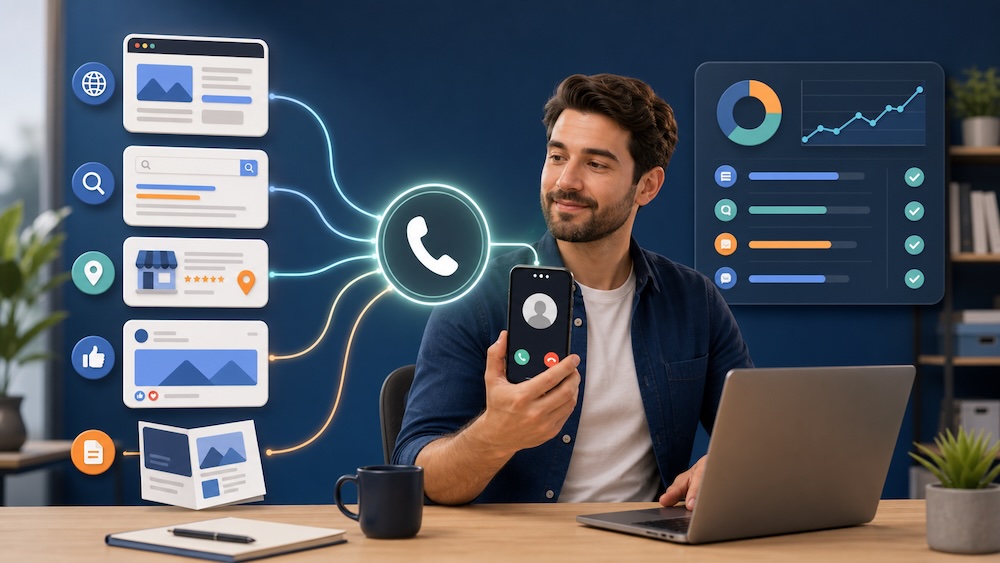
That can be much better than allowing the call to disappear into voicemail, especially when the center is already investing in addiction treatment marketing to generate new inquiries.
Our article on using AI voice systems to improve marketing explains why the call itself is only one part of the funnel. What happens after someone reaches out can have just as much effect on results as the ad, website, or search campaign that generated the inquiry.
Our team of experts is here to help you navigate the complex landscape and drive real results.
TALK TO AN EXPERT →AI Voice Should Support Admissions, Not Replace It
There are now companies offering AI voice and chat agents built specifically for healthcare and behavioral health. Some connect with call tracking systems, CRM platforms, scheduling tools, and website chat.
Those tools may may be easier to work with than a general AI platform. That does not mean they are ready to go without additional setup.
Every treatment center operates differently. Programs, locations, age requirements, insurance processes, admissions hours, transportation policies, and clinical services vary from one facility to another.
Even a platform designed for addiction treatment still has to learn how that specific business operates.
I would not use AI voice to replace an experienced admissions representative. A real admissions conversation can involve clinical questions, family concerns, insurance details, previous treatment, transportation, emotional distress, and immediate safety issues.
AI is still cannot handle all of that on its own.
The System Needs More Training Than Most People Expect
One of the biggest mistakes is assuming the AI will understand the treatment center after reading a few pages from its website.
It will not.
The system needs a lot of direction about what it can say, what it cannot say, and when it should stop answering and involve a person.
That may include:
- Programs and levels of care
- Locations and populations served
- Age restrictions
- Admissions hours
- General insurance procedures
- Transportation policies
- Services the facility does not provide
- Questions that need to be confirmed by a person
- Situations where the call should be transferred immediately
The difficult part is that prompts are not always understood the way a person expects.
An instruction may look clear to us but confuse the AI. One prompt can override another. A missing detail can cause the system to make an assumption. Two instructions can also conflict without the person setting everything up realizing it.
This is why training an AI voice agent is not just a matter of adding more prompts. The instructions need to be organized, tested together, and updated as needed.
The Biggest Risk Is When AI Starts Making Things Up
The most concerning problem is not always that the AI says it does not know the answer.
Sometimes it tries too hard to be helpful.
If the prompts are too broad or the information provided is incomplete, the AI may take what it knows about the general topic and expand beyond the treatment center’s actual services.
It may tell a caller that the facility offers medical detox when it does not. It may say a certain insurance plan is accepted without verification. It may describe a policy that does not exist or suggest that a bed is currently available.
The answer can sound confident even when it is wrong.
I would never allow an AI voice agent to guess about:
- Bed availability
- Insurance coverage
- Admission approval
- Whether someone is a fit for the program
- Medical services
- Medications
- Transportation
- Financial arrangements
If the information must be confirmed, the system should say so and arrange for a member of the admissions team to follow up.
A natural sounding answer is not the same as an accurate answer.
Training Does Not Prevent Every Failure
Even after an AI voice agent has been trained and tested, it can still have bad moments.
It may repeat a question, forget something the caller already said, lose track of the conversation, create an inaccurate summary, or fail to follow the correct transfer process.
It can also simply break down. That is true of any tool, but the consequences are different when the caller is trying to find addiction treatment.
A system may perform well across many calls and then mishandle one that appears straightforward. That is why there should always be a backup plan and a clear way for the caller to request a person.
Someone also needs to review what the AI is doing. This cannot be treated as a system that gets launched once and then ignored.
AI Does Not Understand Tone Like a Person
Most voice agents convert speech into text, process the text, and then generate a spoken response.
That means the AI may understand the words without fully understanding how they are being said.
A caller may sound frightened, impaired, confused, angry, or emotionally overwhelmed. An experienced admissions representative hears those signals and changes how they handle the conversation.
The transcript may not capture that.
Someone can say, “I’m fine,” while clearly sounding like they are not fine. A family member may speak calmly while describing a serious situation.
Some platforms claim to analyze emotion or tone, but I would not rely on that feature to make decisions about a caller’s condition or level of risk.
When the system is uncertain, it should transfer the call instead of trying to interpret the situation on its own.
Real Calls Are Messier Than the Demo
AI voice systems can sound impressive in a sales demo. The person speaks clearly, waits for the agent to finish, and asks questions the system is prepared to answer.
That is not how every real call goes.
People interrupt. They change subjects. They speak while the AI is still responding. They may be calling from a car, a crowded room, or somewhere with a television playing in the background.
Overlapping speech
The AI may begin answering before the caller has finished. The caller may then interrupt the AI, causing the system to miss part of the conversation or restart the wrong question.
When this happens repeatedly, the call can feel unnatural and frustrating.
Background noise
Traffic, music, television, children, and other voices can affect how accurately the system understands the caller. It may misunderstand what was said or respond to something that was not directed at it.
Side conversations
A caller may turn to someone in the room and say, “Be quiet,” “What was the name?” or “Do you still have the insurance card?”
The AI may treat that as part of the main conversation and respond to it.
Speech differences
Accents, poor phone connections, speech conditions, and substance impairment can all affect how well the system understands the caller.
These are some of the reasons testing needs to involve more than employees speaking clearly from a quiet office.
Where AI Voice Works Best
AI voice performs best when its job is limited and kept simple.
Collecting information after hours
This is the use case I would recommend first for many treatment centers.
The AI can answer, explain that the admissions team is unavailable, collect the caller’s information, and create a call back request for regular business hours.
For a center with limited staff, that alone can make the technology useful.
Calls staff cannot answer
If the admissions team is already helping another caller, the AI can answer the next call and collect information instead of allowing it to go unanswered.
Basic call routing
The agent may also help separate admissions inquiries from employment calls, vendor calls, billing questions, current patient calls, and other general requests.
Call transcripts and summaries
AI can transcribe calls and create a basic summary for the admissions team. That can save time, but staff should still review the summary before relying on it.
Call review
One of the better uses of AI may happen after the conversation.
AI can help identify repeated caller questions, missed transfers, slow follow up, inconsistent information, and calls that ended without a clear next step.
That information can also help evaluate addiction treatment PPC campaigns. A Google Ads campaign may generate many phone calls while producing very few qualified treatment inquiries. Call quality matters more than the conversion count shown inside the advertising platform.
Where AI Voice Should Not Work Alone
There are parts of the admissions process that should be handled by a person.
I would not allow an AI voice agent to independently handle:
- Clinical assessments
- Diagnoses or treatment recommendations
- Detox or medication questions
- Placement decisions
- Suicide or self harm concerns
- Overdose situations
- Crisis intervention
- Insurance guarantees
- Promises of admission
- Confirmed bed availability
- Situations the system does not clearly understand
The caller should also know they are speaking with an automated assistant. The AI should not pretend to be a clinician or admissions representative.
There should always be a clear way to ask for a person.
A Combination of AI and a Human Makes More Sense
The best setup today is usually a combination of AI and a real person.
AI handles the simple and repetitive parts. The admissions team handles the conversations that require experience, empathy, verification, or judgment.
For example, when a call comes in after hours, the AI can answer the phone, identify itself, collect the caller’s name and contact information, ask for the general reason for the call, and send a summary to the admissions team.
A staff member can then review the information and follow up during regular hours.
If the caller uses language that seems like it requires an urgent followup, the AI should have a separate transfer process rather than continuing with the normal questions.
This gives the treatment center the ability to not rely on the AI for anything it shouldn’t be able to handle.
These systems may also need to connect with the facility’s website, CRM, analytics, and call tracking platforms. Those connections should be planned as part of the broader addiction treatment website development and admissions process, not added without considering where the data will go or who will follow up.
Privacy and Compliance Need to Be Reviewed
AI voice platforms may record calls, produce transcripts, create summaries, and pass information into a CRM or another system.
Treatment centers need to understand exactly what happens to that information.
Before using a platform, the center should determine:
- Whether calls are recorded
- How callers are notified
- Where recordings and transcripts are stored
- How long the information is kept
- Who can access it
- Whether other vendors receive the data
- Whether the data is used to train shared AI models
- Whether records can be deleted or exported
- What happens to the data when the contract ends
- Whether the vendor will sign a business associate agreement when required
A vendor describing its platform as built for healthcare or HIPAA compliant does not answer all of these questions.
The treatment center still needs to review the actual process and determine how HIPAA, 42 CFR Part 2, state privacy requirements, and call recording laws apply.
Legal, compliance, clinical, and operations leaders should be involved before sensitive admissions information is connected to an AI platform.
Test the System Like a Real Caller Would
A few successful demo calls are not enough.
The system should be tested with different speaking styles, different questions, background noise, interruptions, and situations it is not supposed to handle.
Ask about services the facility does not provide. Ask whether a bed is available. Ask the AI to verify insurance. Change subjects halfway through the call. Have two people speak near the phone. Request a person immediately.
The goal is not to prove that the AI works during a perfect call. The goal is to find out how it fails before an actual caller does.
Testing should also continue after launch. Review the calls where people hang up, ask for a person, repeat themselves, or receive an incorrect answer.
Training Is an Ongoing Job
Launching the agent is only the beginning.
The treatment center should keep checking transcripts, incorrect answers, failed transfers, caller complaints, and questions the AI struggled to answer.
When something goes wrong, the team needs to determine why.
Was the prompt unclear? Was an important restriction missing? Did one instruction override another? Was the information outdated? Should the AI have transferred the call instead of trying to answer?
The solution is not always to keep adding prompts. Too many overlapping instructions can create new problems.
The system needs someone responsible for maintaining it, testing changes, and deciding when it should be paused.
Measure More Than Answered Calls
An AI voice agent can answer every call and still perform poorly.
What matters is whether it improves the entire process.
Treatment centers should look at:
- How many calls were answered
- How many callers completed the call with the AI
- How many requested a person
- How many call back tasks were created
- How quickly staff followed up
- How many calls were qualified treatment inquiries
- How many led to assessments or admissions
- How often the AI gave incorrect information
- How often transfers failed
- How much staff time was saved
- How much time staff spent correcting errors
This is part of the larger challenge of connecting traffic, calls, CRM activity, and admissions results. Our guide to rehab digital marketing strategies explains why those systems need to work together.
Should Treatment Centers Use AI Voice Agents?
Yes, but the role given to the AI matters.
For treatment centers without enough staff to answer every call, AI voice can provide useful coverage after hours and when the team is busy. It can collect basic information, create call back tasks, support call routing, and reduce the number of inquiries that disappear into voicemail.
It can also help with transcripts, CRM notes, reporting, and call review.
What it cannot reliably do is replace a person and manage the complete admissions process.
AI voice still misunderstands callers. It struggles with background noise, interruptions, side conversations, and how a person sounds. It may also provide answers that were never approved if the prompts and restrictions are not clear enough.
What I would do is to give the AI a limited role, train it around the facility’s real policies, test it under realistic conditions, and review its calls regularly.
AI voice can help a treatment center answer more calls. It should not be trusted to improvise with someone’s path to care.
Need Help Evaluating or Setting Up AI Voice?
AI voice can improve coverage after hours and help collect new inquiries, but the system needs to be built around the treatment center’s actual services, policies, admissions process, and transfer rules.
Brand House helps addiction treatment providers help choose the right AI voice tool, plan call flows, connect systems with CRM and tracking tools, and test the experience before launch.
Talk to Brand House about AI voice setup.
This article provides general marketing and operations information and does not constitute legal, clinical, privacy, security, or compliance advice.
Brand House builds campaigns around search intent, budget control, landing pages, conversion tracking, and lead quality — so you generate qualified leads instead of just buying traffic.
TALK TO AN EXPERT →